I often wonder if my reaction to a book is as much a reflection of my mood or receptiveness at that moment as it is any quality inherent to the book itself. It has often happened that a book that frustrated or bored or annoyed me on first reading proved to delight or at least engage me on second (or third) try.
What is unusual is a book that delighted on first reading disappointing on second.
“Anglo-Saxon Attitudes” is a novel that is pretty well forgotten now – it has been republished by the New York Review of Books, which specializes in re-issues of underappreciated or neglected works – but once upon a time it was revered as a great mid-century British novel (Anthony Burgess called it one of the five best of the century), and the author, Angus Wilson, was considered an equal – or at least the logical successor – to Evelyn Waugh.
The American hardcover edition was an oddly familiar presence in my childhood. It sat unmoving on my parents’ bookshelf, presumably read (by them) back in the late ‘50s and then left untouched (by me or anyone else) for decades. I remember scanning the shelves as a teenager when I had nothing to read, and being vaguely intimidated by the stuffy, academic-sounding title and the austere design of the spine.
At some point, long after growing up and moving out, I picked up a copy somewhere and discovered a breezily written, vicious social satire of Britain in the 1950s with a thoroughly modern man at its center, Gerald Middleton, a man who, when he looks at himself in the mirror, thinks, “What a waste.”
The novel ties together Gerald’s young days as a budding archaeologist (and lover) and his later incarnation as an embittered academic who, at least in his own eyes, has failed to live up to his promise. There are plot strands for each of his children, and others besides, and in all the novel comprises a busy invented world. The novel was already at least 30 years old when I first read it, but it seemed fresh and funny (and pointed and real) and British (erudite, elegant, understated) without being plummy or fussy. It was also hard not to be impressed by the straightforward depiction of homosexuality, given the attitudes (Anglo Saxon and otherwise) regarding homosexuality back in the 1950s.
Now, flash forward to 2009.
Having completed the long and sometimes arduous project of reading “2666” from page 1 to page 830, I found myself in the bookstore looking for something lighter, and my eye fell on “Anglo Saxon Attitudes,” and I was happy to shell out a few bucks for the chance to read it again.
And yet on rereading I found myself knitting my brow and wondering what in the world I had found enjoyable about this book the first time around. What had once struck me as perceptive now seemed cumbersome and obvious; the writing that originally seemed clean and well-wrought now rang twittery and false; the plotting that once I had considered sly and thoughtful now seemed absurdly elaborate and littered with ridiculous coincidences.
Strangest of all was that the tone, which had once struck me as cool and simple, now seemed overwrought, fey and campy.
I’m sure my tastes and critical facilities have changed over the years, but it seems strange to me that I should have such a radically different response the second time around – considering that I first read it as a full adult. This was not like, say, reading “On the Road” as a teenager and then coming back to it as a 40-year-old. (Although it’s worth noting that I read the “original scroll” of “On the Road” when it was published a couple years ago and I really enjoyed it, over-the-hill though I may be.)
In any case it’s sad to dislike a book you once liked. There’s not enough really great books out there – and I had once thought this was indeed a great book. (Hey, so did Anthony Burgess!)
Who knows what I’ll think on third reading in 2030?
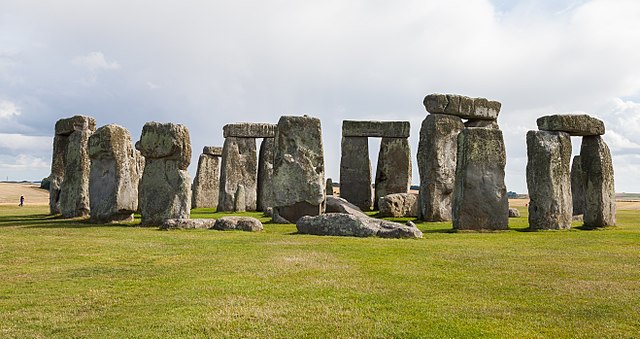
Photo credit: Diego Delso via Wikimedia Commons
 Far From Brooklyn

Leave a comment